REPORTS
AUGUST 2026
DISSENTERS AND THEIR RECORDS
by Graham Warmington
We welcomed Graham Warmington to our August meeting who gave us a very informative overview of Dissenters and their Records. Henry VIII was really the first dissenter when he established the Church of England after breaking away from the Roman Catholic faith. Successive Monarchs imposed various acts which made worshipping any other faith illegal and often imposed heavy fines. But the Baptists, Methodists, Quakers, Congregationalists, etc, continued finding ways to meet and worship.
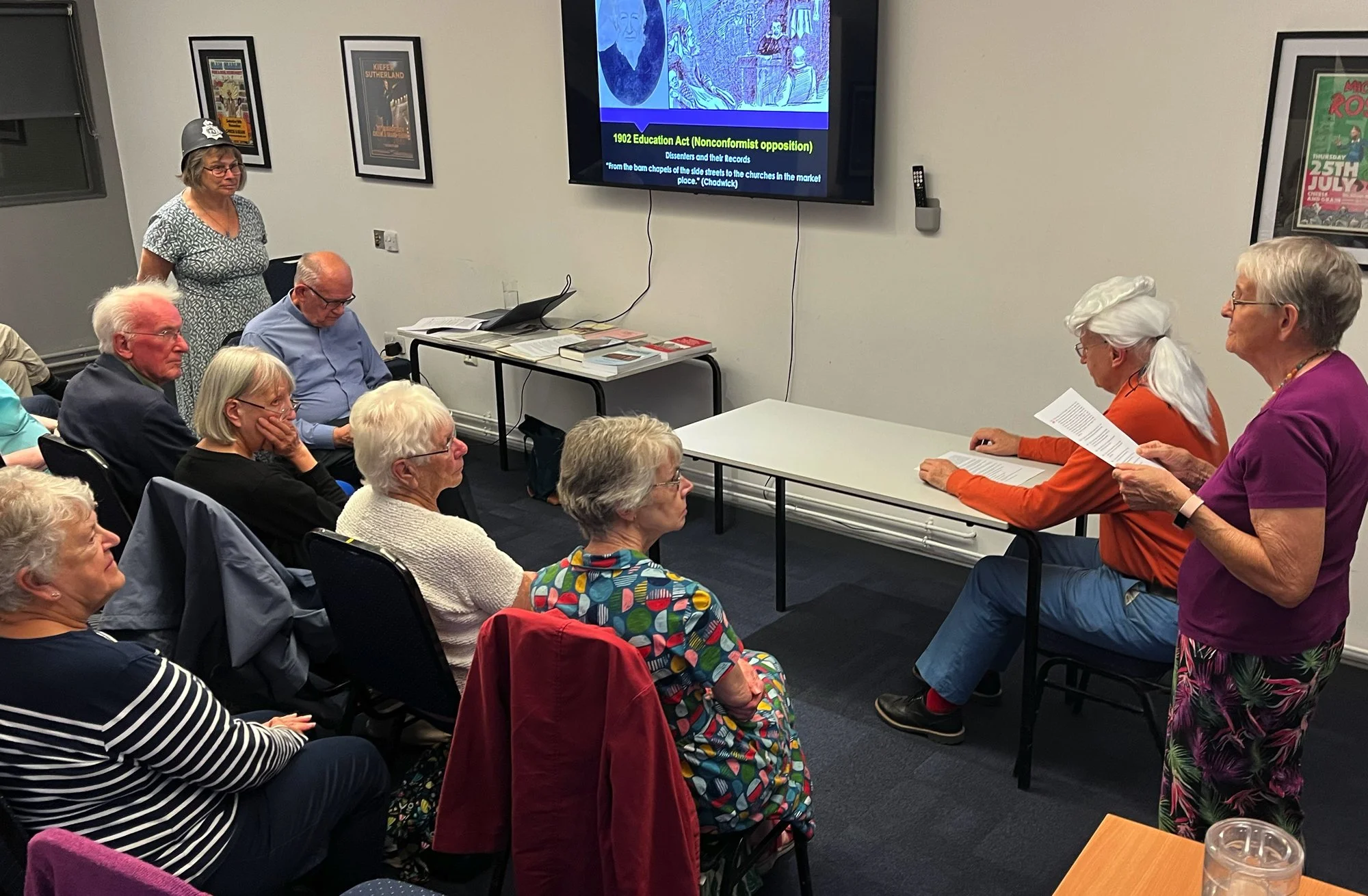
Graham explained how they coped through the 17th, 18th and 19th centuries until finally all groups were able to practice their faith without fear of retribution. He enacted (with a few volunteers) a court session with a minister refusing to pay the dues imposed in the 1902 Education Act, which delighted the audience.
Graham thought there was only one Dissenters burial ground in England but then realised that Frome has its very own Dissenters Cemetery in Vallis Road. He explained that the dissenter’s baptism, marriage and death records were often not kept or even destroyed, which made life difficult to find specific ancestor records. However, he supplied a list of suggested places to start any research.
After several questions he was warmly thanked for an enjoyable evening.
Sue Latham
JUNE 2026
FROME IN THE MONMOUTH REBELLION
by Gary Kearley
Frome Family History Society welcomed popular local speaker, Gary Kearley to their June meeting to speak on the subject Frome and the Monmouth Rebellion.
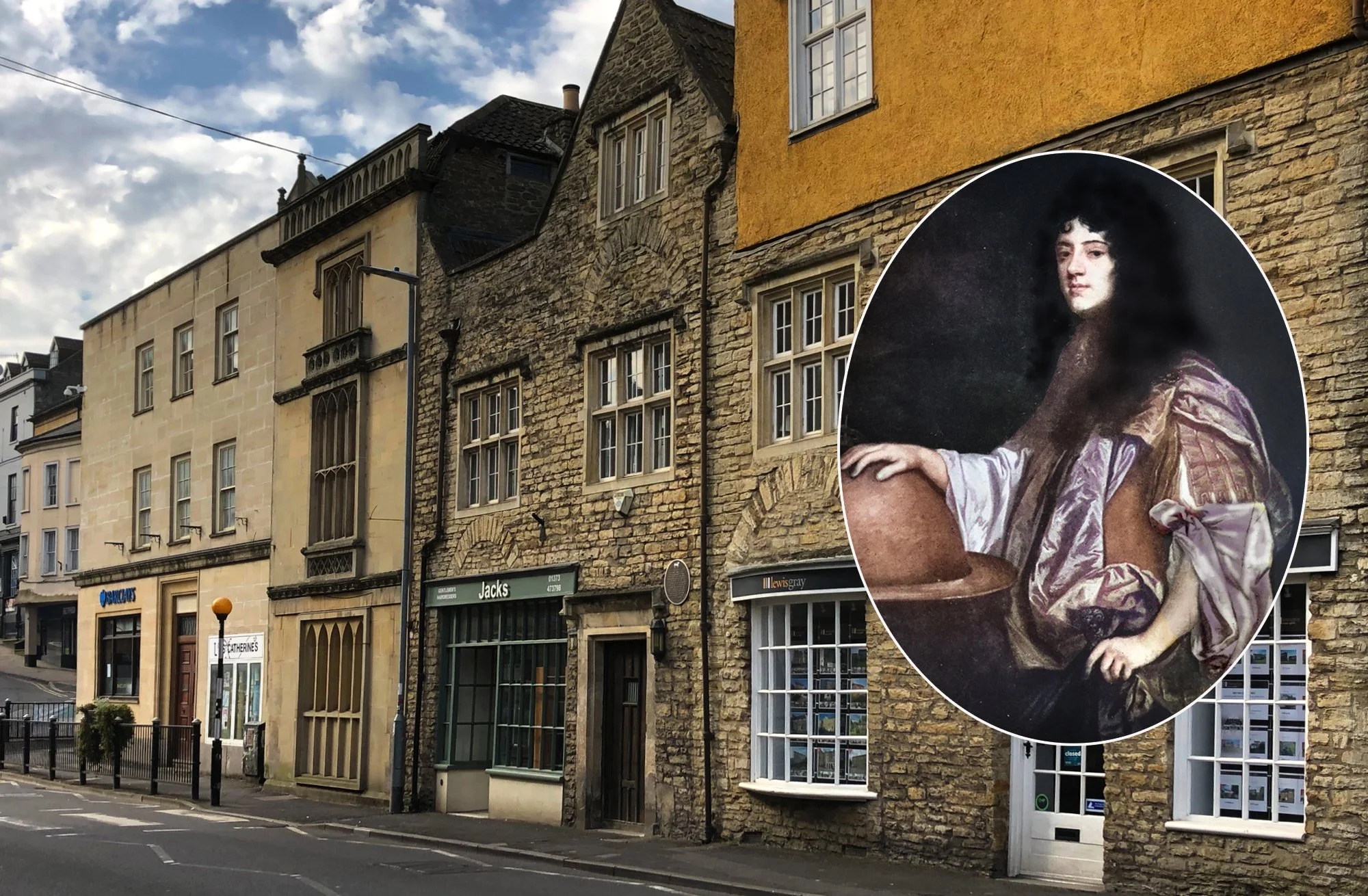
Gary began by outlining the background to the political situation when Oliver Cromwell, followed by his son Richard, had been ruling England for nine years after the execution of Charles I in 1649. Charles II returned to England from France together with his wife Catherine of Braganza who was unable to produce an heir despite many pregnancies and births. However, Charles did have a son, James, Duke of Monmouth by his believed to be mistress, Lucy Walter. Later research suggests that they may have been married which, had it been known then, would have meant the crown passing to James Duke of Monmouth, a protestant, and not to the catholic James II.
James II was not a popular choice by protestants and the Duke of Monmouth was encouraged to overthrow his uncle and claim the crown. He landed in Lyme Regis on the understanding that the West of England was committed to his cause. That proved to be far from the truth. The landed gentry were not sympathetic and James was unable to recruit as many soldiers as he would have liked. He fought several battles with some success and was crowned King in Taunton but the 4,000 troops waiting for him in Frome turned out to be fewer than expected. His popularity was not helped by marching to Wells where he stormed the cathedral upsetting the landed gentry.
The battle of Sedgemoor took place near Bridgwater where Monmouth's forces, numbering around 3,600, were cornered. In a desperate attempt to turn the tide, Monmouth launched a surprise night attack against the Royalist camp. The battle lasted only about five hours and resulted in a decisive victory for the Royalists. Monmouth's forces were overwhelmed, suffering heavy casualties.
The subsequent Bloody Assizes of Judge Jeffreys where, in a series of trials of Monmouth's supporters 320 people were condemned to death and around 800 sentenced to be transported to the West Indies for ten years hard labour. Executions took place at Gorehedge, Critchill and probably in the Market Place. A pack of playing cards depicts Frome’s involvement. The names of most of those involved are still available and their occupation is also listed, interestingly many of them were from the troubled cloth industry in Frome.
Monmouth was by now a broken man and after the Duke of Argyle, one of his supporters, was defeated in Scotland, he realised that his time was up. He was beheaded in July 1685. Following the death of James II the crown went to William and Mary who reigned jointly until Mary’s death in 1694 William continuing into 1702.
Gary was warmly thanked for a very interesting and informative evening.
Chris Featherstone
MAY 2026
DATING AND PRESERVING OLD PHOTOGRAPHS
by Julie Davis
Frome Family History Group welcomed Julie Davis from Wiltshire and Swindon History Centre to their May meeting. Despite the intolerable heat a number of us gathered to listen to Julie telling us about understanding, dating, and preserving old photographs.
Julie began by outlining the history of photography and recommending that we visit the Fox Talbot museum in Laycock.
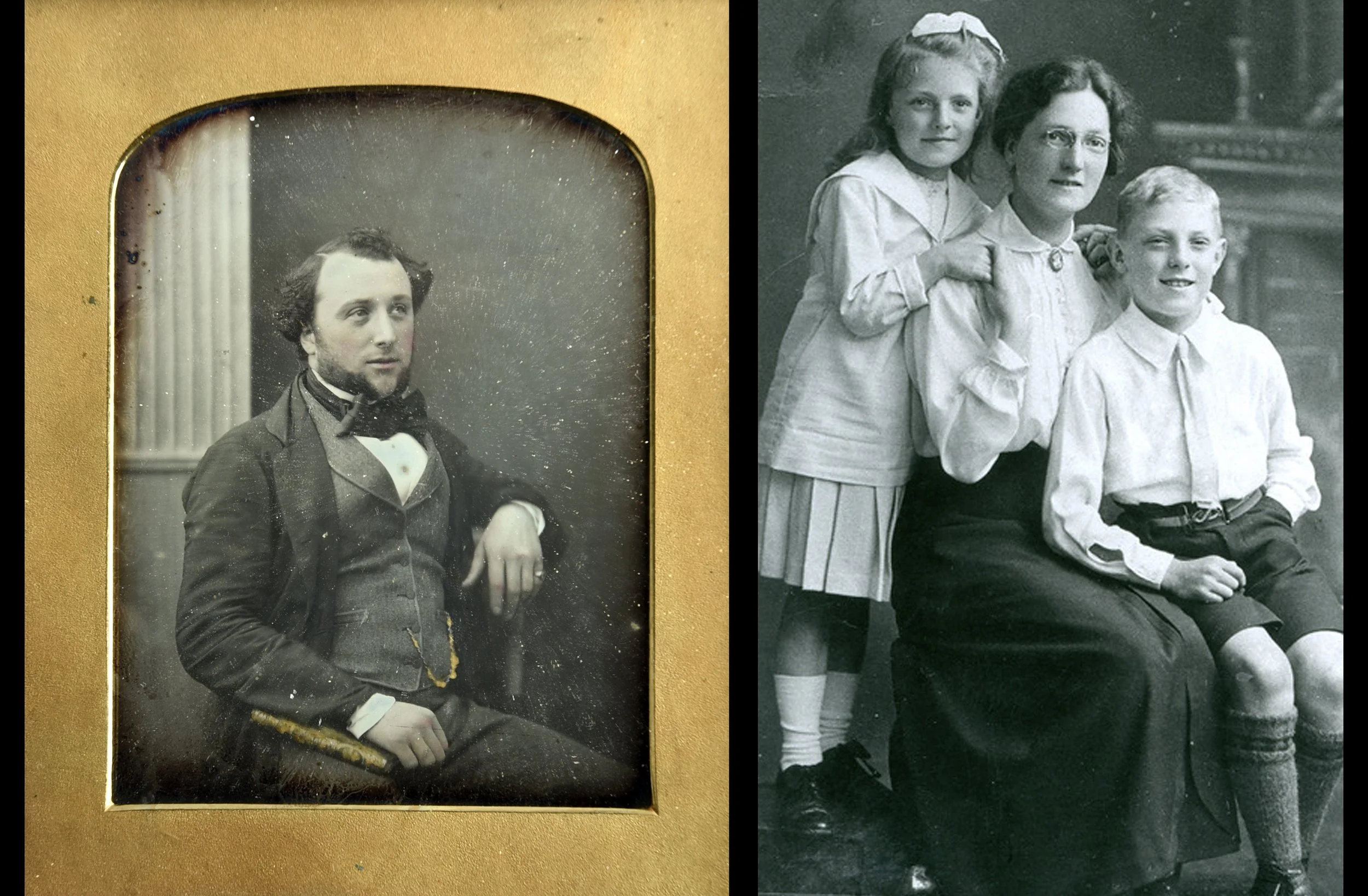
In 1835, Henry Fox Talbot invented a viable method of spreading a gelatine emulsion on paper. Later, in 1839, astronomer John Herschel came up with a way to fix the image recorded by silver halides. The daguerreotype was an image development process that Louis Daguerre invented around 1839, and it soon gained commercial interest – primarily because the photographs developed using the daguerreotype were sharper and more stable. Henry Fox Talbot was the English inventor who carried the daguerreotype further and eventually commercialized the calotype process in 1840. Between 1850 and 1890 glass plate negatives were used. The albumin coating used around 6,000,000 egg whites every year but resulted in a clear image.
Julie moved on to describing the types of images we find in our collections of family history records. The Cartes des Visites were illustrated calling cards with the image of the owner on. These were joined by cabinet cards which were pasted on to board and used by businesses as publicity material. Postcards arrived in the late nineteenth century and can still be requested today. Roll film was developed in 1888 and was used into the late twentieth century.
Tips for dating photographs included fashion and hair styles but it is important to remember that photographers provided clothes for their poorer customers to wear during the process. Images were often taken to record an important family occasion and could even include a person who had passed away by seating and supporting them to make sure they looked alive! Looking at buildings and interior design can help with dating a photograph. Julia advised us to make use of trade directories to help with this, and, of course, a number plate on a car is very useful.
Finally, Julia advised us on how to store our collections of old photographs using acid free equipment and keeping light levels low and humidity at less than 50%. She was warmly thanked for her very useful information.
Chris Featherstone
APRIL 2026
HANNAH MORE AND HER MENDIP SCHOOLS
by John Page
This fresh interpretation of Hannah More uses previously unavailable local sources offering a somewhat different account of her Mendip Schools.
John began by outlining Hannah More’s early life. She was born in 1745, the fourth daughter of school teacher Jacob More from Fishponds near Bristol. Her sisters were Mary, Elizabeth, Sally and Martha. The girls were educated by their father who would not let them study Latin or mathematics as he considered that women’s brains were not suited to these subjects. This was a commonly held view at the time. Hannah finished her education at the school that her sisters ran but was never adept at mathematics, however, was fluent in French. She later taught at the school but gave up when she became engaged to William Turner who repeatedly put off the wedding until Hannah broke off the engagement. More suffered greatly as a result of the wedding being called off and Turner accepted the blame for her subsequent breakdown. He paid her £200 per year for the rest of her life.
The money enabled Hannah More to live as an independent woman and allowed her to move to London where she met and mixed with people such as Dr Samuel Johnson, Joshua Reynolds, and Horace Walpole. She wrote plays, poetry and one novel, “Colebs in Search of a Wife”. In 1762 she wrote “The Search for Happiness” and in 1785 a tragedy, “Percy” where the actor David Garrick wrote the prologue.
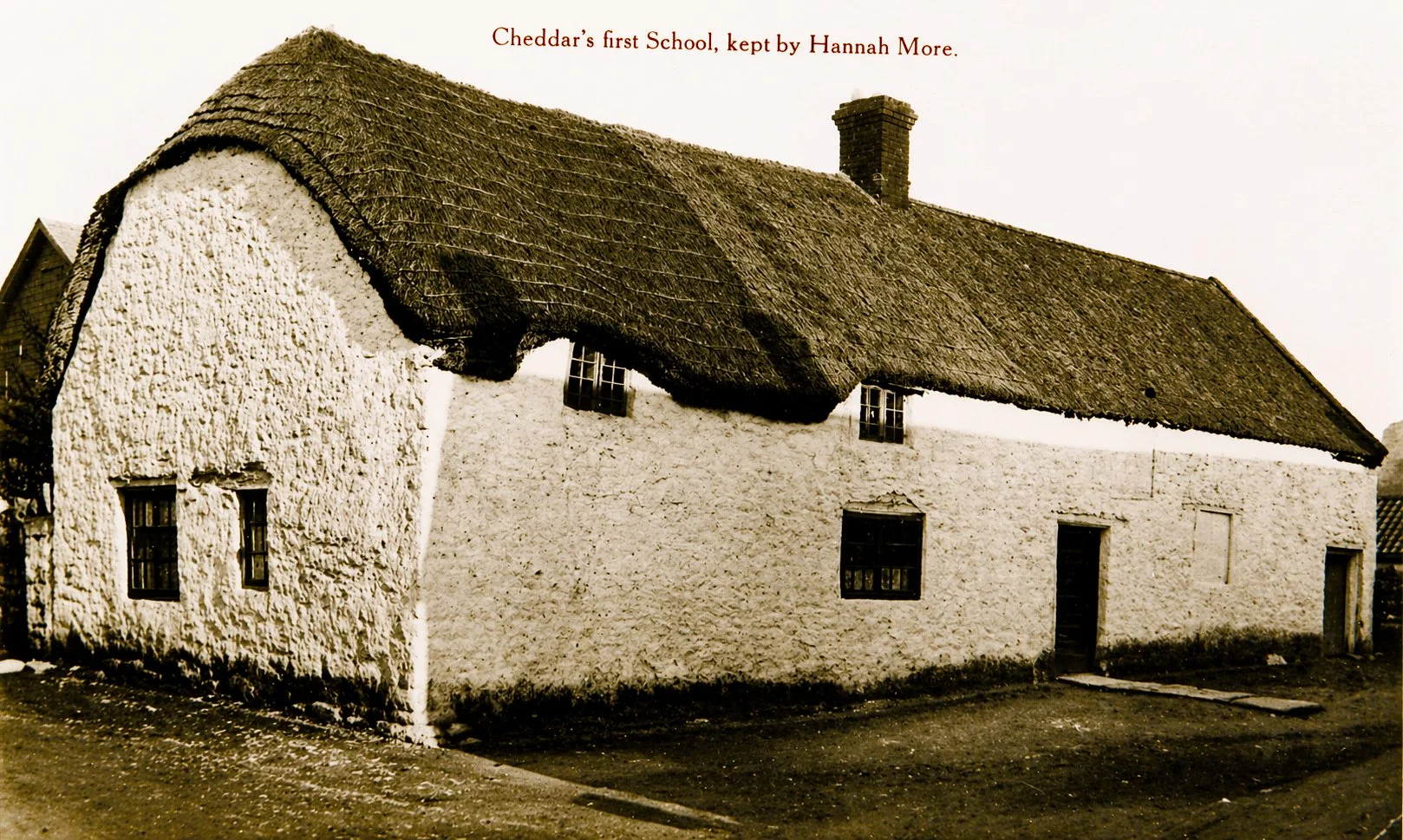
In 1785 More bought Cowslip Green in Cheddar where she often entertained William Wilberforce a British politician, philanthropist and leader of the movement to abolish the Atlantic slave trade. Wilberforce visited Cheddar and was appalled by the poverty he encountered. He offered to fund a school for the poor in Cheddar if Hannah More would run it. The Cheddar school was the first of many such schools in the Mendip area often starting out as Sunday schools but later adding a little more learning. She organised picnics for the children, started the first Women’s Friendly Societies and helped set up the first National School.
Hannah More retired to Bristol where she continued her philanthropic work until she died there in1883.
Chris Featherstone
MARCH 2026
THE BRITISH 1820 SETTLERS TO SOUTH AFRICA
by Dawn Denton
Our speaker for the March meeting was Dawn Denton who gave a well-illustrated presentation on the 1820 settlers in South Africa, about 50 of whom came from the Frome area.
Dawn began by giving examples of other important events that happened on 31st March including the opening of the Eiffel Tower and the death of Jesse Owens, who won 4 gold medals at the 1936 Berlin Olympics.
National events leading up to the emigration of 4000 people to South Africa include the Peterloo massacre with riots on the streets of Manchester and the introduction of the corn laws. Following the Napoleonic wars, Britain faced economic hardship and the opportunity to go to South Africa was appealing.
British people were needed to fill the colony and the Government were expecting soldiers but they got farmers. Each male was given100 acres of land and a 3-year contract. The cost to emigrate was £10 per person or £14 for a family and £5 for each extra child. Frome people were encouraged to go by Thomas Bunn (1767–1853) a British gentleman and philanthropist, who devoted his energies to improving his native town of Frome. The journey was long and culminated in Algoa Bay for many. People were taken to their allotted land and left to fend for themselves. There was no shelter provided despite having arrived in the middle of winter and it was a struggle to survive as the seed they were given was diseased and the implements supplied were not of a good quality. Local tribes attacked them and families had to walk miles on a Sunday to worship at the nearest church. Despite these hardships many survived and there are still descendants living in Algoa Bay to this day.
Chris Featherstone

FEBRUARY 2026
A HISTORY OF IFORD’S FAMILIES & THEIR INFLUENCE ON THE LANDSCAPE
by Marianne Cartwright-Hignett
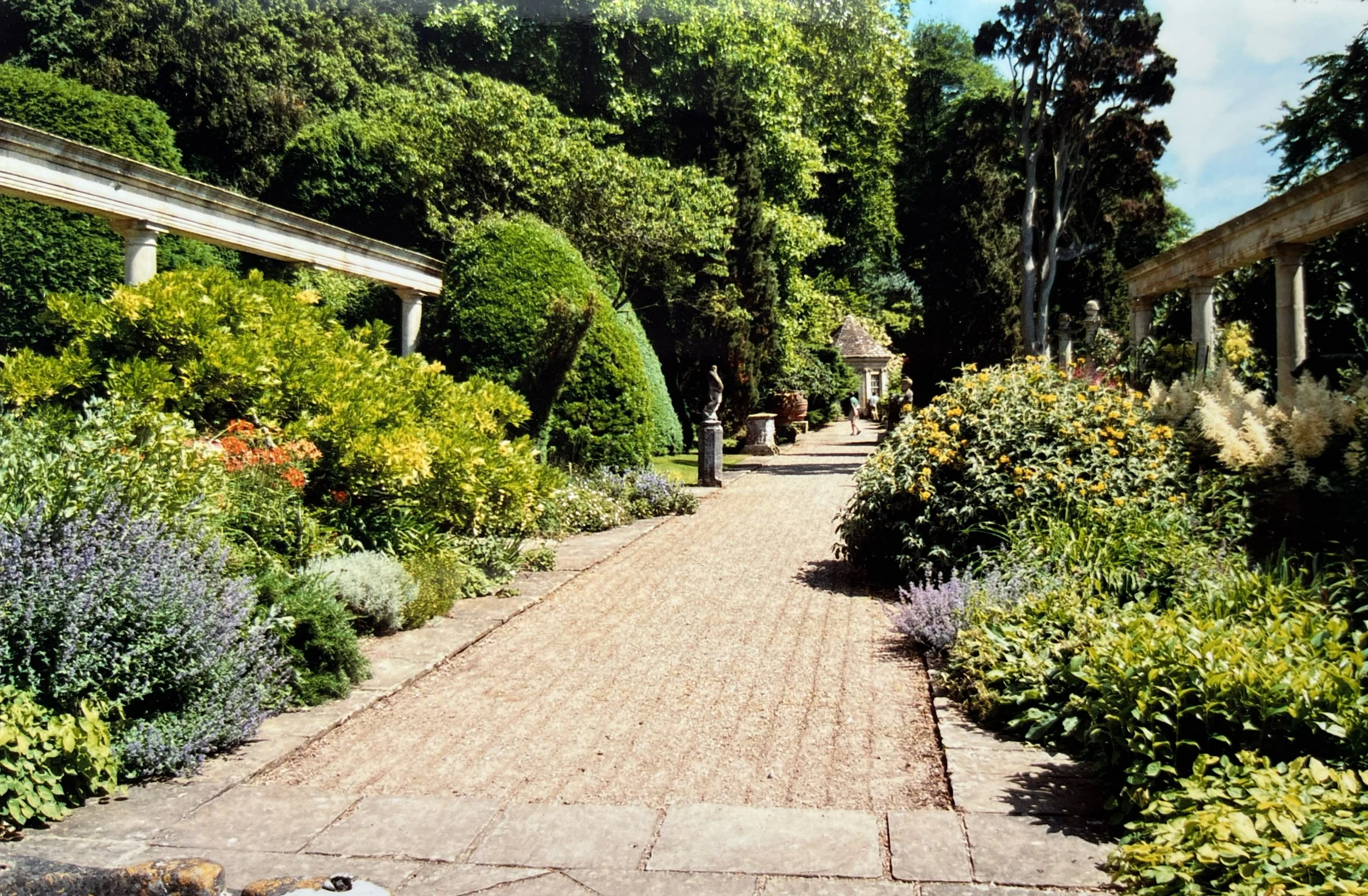
Frome Family History Group welcomed Marianne Cartwright-Hignett from Iford Manor to our February meeting. Marianne married into the Cartwright-Hignett family who have owned Iford Manor since the early 1960’s.
After introducing herself, Marianne told us of her love of history and her interest in the history of Iford Manor. Her research was so extensive that she employed two students from Oxford University to help her, resulting in her being able to tell us about the history of Iford going back to Roman times.
The first mention of a family at the Manor were the de Iford’s who arrived somewhere in the 1200’s and stayed until 1362. They were wealthy lawyers from Bath who then passed the land to the monks at Hinton Charterhouse. They were followed by the Horton family who were clothiers and ran several mills in the area. They stayed until William Horton, who styled himself as a gentleman, started to lend money and the house, by which time had become a family residence, was sold to the Hungerford’s in 1625. The following families were all clothiers until 1797 when the Gaisford family took over. The Gaisford’s planted the wisteria in 1825 which is still there today and attracts visitors from all over the world. They made substantial contributions to the gardens and finally sold to William Rooke in 1858.
The architect, Harold Peto bought Iford Manor in 1899 and stayed until 1933. He redesigned both the house and garden creating the great terrace, a summer house and repairing and improving the whole site which is now grade one listed.
Iford Manor was sold by the Peto family to Elizabeth Cartwright who married John Hignett and became Elizabeth Cartwright-Hignett. John Hignett created the Japanese garden and together with Marianne and William Cartwright-Hignett who took over in 2020, created a café, restaurant and a shop. They also run a 1000-acre estate where the emphasis is on sustainability and regeneration whenever possible.
Marianne was thanked for an excellent presentation with beautiful photographs of the gardens.
Chris Featherstone